Celebrating Spring Harvest Festivals & AANHPI Heritage Month
Farming is like chess. The people tending to plants and crops must strategize to come up with their next five moves, anticipate the unexpected and utilize their resources to ensure a productive harvest. It’s a grueling and demanding process that many Santa Clara Valley ranchers, farmers and farmworkers experience on a regular basis. These individuals provide nourishing food for the community and maintain our local food system, yet their contributions often go unnoticed.
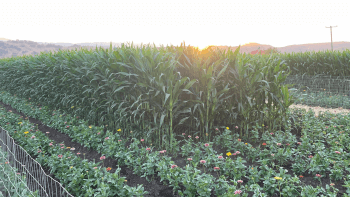
Agricultural row crops include stalks of corn and flowers.
As the Open Space Authority continues expanding support for agricultural communities in the South Bay, we all have a role to play in recognizing the people behind our food. Visiting local farms, supporting farmers markets and learning more about agricultural practices – locally and around the world – can uplift the agricultural community and help you connect with your local food system.
Many cultures celebrate farmers by practicing gratitude for their hard work and engaging in cultural rituals that are believed to provide a fruitful harvest in the fall. In the northern hemisphere, many harvest festivals coincide with May which is also Asian American Native Hawaiian Pacific Islander (AANHPI) month in the United States.

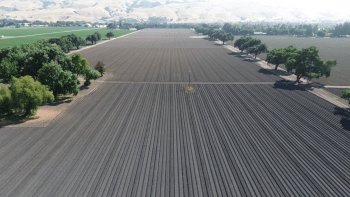
Leafy row crops line an agricultural field with oak-dotted golden hills in the background.
Exploring these traditions offers a window into how communities across Asia, Hawai’i and the Pacific Islands honor the land and those who cultivate it. Here are a few harvest celebrations that illuminate this shared spirit of appreciation:
Pahiyas Festival: Philippines

Hats, pineapples and bright decor hangs from the exterior of a housing complex in the Philippines in honor of the Pihayas Festival.
On May 15, Filipinos gather for a two-week festival to honor the patron saint of farmers, San Isidro Labrador. Historically, farmers participated in this cultural celebration by displaying produce in their homes and waiting for a priest to bless their harvest, protecting their crops and ensuring prosperity.
During the Pahiyas Festival, communities also celebrate by hosting a large, joyous parade that includes music from marching bands and large paper mâché puppets. Together, participants share traditional Filipino dishes with one another.
Filipino families typically invite others into their homes to eat, dance and enjoy time together during this special celebration that highlights the importance of productive agriculture in the Philippines.
Moatsü Festival: India

The bonfire is a central component of the Moatsü Festival celebrations.
The Ao Naga Tribe of Nagaland, India marks the end of the planting season and the start of the resting season for farmers with a celebration called the Moatsü Festival. The festival takes place over a three-day period at the beginning of May during which Tribe members sing and dance to traditional songs around a large bonfire. The Aos people hope that their celebrations will increase the land’s fertility and produce a generous crop output during the upcoming harvest season.
The celebrations also focus on tidying up – both within the agricultural fields of the Ao Naga people and their homes. Think of this festival as a type of “spring cleaning” that celebrates the Ao Naga Tribe’s connection to agricultural and builds strong community among its members.
Boun Bang Fai: Thailand & Laos

A rocket is launched during the Bun Bang Fai Festival, leaving behind a large smoke trail.
Kaamatan: Malaysia

Traditional priests and priestesses of the Dusun people perform the magavau, a ritual dance of the Kaamatan Festival.
Kaamatan is an annual harvest festival in Malaysia that celebrates Ponompuan, the daughter of the creator of human life who sacrificed herself when her people needed food. As a result of her sacrifice, the Malaysian people saw an increase in rice production as well as other essential crops. The festival also celebrates the rice spirit, Bambarayon, who brings prosperity and health to all who celebrate.
Now, every May 30 and 31, Malaysian ethnic groups honor Ponompuan with a festival that includes a beauty pageant, a dance performance with bamboo poles, a singing contest and the “Magavau” ceremony. This traditional ritual thanks Bambarayon for nourishing the Malaysian people with past, present and future rice harvests.
Honorable Mention: Lei Day in Hawai’i

Purple, yellow and white flowers adorn a series of leis.
The people of Hawai’i typically celebrate the harvest season from October to January, instead of May. However, the islands celebrate Lei Day or “May Day” to honor the long-standing tradition of leis which symbolize the connection between people and the beautiful nature found in Hawaii.
Traditionally, Native Hawaiians gift flowers to others as a way to show love, respect and offer up a piece of themselves. Lei Day, celebrated every May 1 since 1928, honors the Hawaiian tradition of weaving and wearing leis, or garlands, that are typically made from island flowers, leaves or shells.
Hawaiian residents and visitors gather to celebrate this special day with music and cultural performances that embody the “aloha” spirit, or the kindness and respect that Hawaiians show for one another and the earth. The people of Hawai’i would be unable to create these beautiful leis without the care put into tending native flowers and plants which offer a way for many Native Hawaiians to connect with their heritage and Mother Earth.

A farmer in the Santa Clara Valley holds up a box of fresh produce.
These springtime harvest festivals honor the commitment of farmers around the world to nourish communities while also providing people with an opportunity to gather, give thanks and celebrate the other-worldly powers that help produce bountiful harvests.
In honor of these cultural celebrations, the Open Space Authority gives thanks to the many ranchers, farmers and farmworkers who play an important role in maintaining the agricultural fields of Santa Clara Valley and provide residents with fresh produce and important crops, like hay and alfalfa.
Celebrate local agriculture and learn more about our vision for the future of farming in Santa Clara Valley by visiting https://www.openspaceauthority.org/agriculture.
Related Posts