Preserving What Matters
Inside San Jose Spotlight's PolitiBeat 2026's Conversation on Santa Clara Valley's Open Spaces
When Kathy Sutherland, Board Chair of the Open Space Authority (the Authority), and Alice Kaufman of Green Foothills sat down for Spotlight's PolitiBeat 2026's "Preserving What Matters" discussion, the conversation wasn't just about land. It was about legacy, community values and collaborative efforts helping Silicon Valley balance growth with the open spaces residents love.
The panel was moderated by Thi Tran, Director of Development for San José Spotlight.

Left to right: Thi Tran, Director of Development at San José Spotlight, Kathy Sutherland, Board Chair of the Authority, Lisanna Dominguez, Vice Chair of the Authority at PolitiBeat 2026. Photo courtesy: Santa Clara Valley Open Space Authority
A Childhood That Shaped Her Mission
Sutherland's connection to conservation isn't all politics. It's her personal history. She grew up in San Jose's Santa Clara Valley back when it was still orchards, and watched the landscape transform before her eyes. That experience taught her something important: once you make land use decisions, you can't take it back.
That lesson still drives her work today to help protect natural and working lands and make sure that people who live in Santa Clara Valley have easy access to nature. "This isn't a short-term project," Sutherland noted. "This is the long game, and it's not going to be solved in a generation. It's going to be forever that we have to think about how we preserve our natural lands."

Kathy Sutherland speaks at an Open Space Authority public access groundbreaking ceremony. Photo courtesy: David Mauk/Santa Clara Valley Open Space Authority
Wins in Coyote Valley - and a Warning
The panel talked about two recent, high-stakes development proposals in *Coyote Valley.
(*For context: Coyote Valley is one of the Authority's top priorities for conservation. This large area of natural land and farmland sits just south of urban San Jose. It connects more than 1 million acres of wildlife habitat, stretching between the Santa Cruz Mountains and the Diablo Range. The land also helps store floodwaters, recharge groundwater, lower wildfire risk, and supports local farms. In recent years, state and local leaders have named Coyote Valley one of the most significant landscapes in California)
One recent example that came up during the discussion was the Authority working collaboratively with LS Power to move a proposed project (that would have previously been located at a future wildlife crossing site) to a more appropriate site at an existing PG&E substation. In another case, AES recently withdrew a plan for a 40-acre battery storage facility on prime farmland. Sutherland was glad about these outcomes, noting, "it's nice to feel like you can make a difference."
Kaufman explained why Coyote Valley keeps facing these kinds of proposals. The area was once planned as the site of San Jose's future industrial growth. That changed in 2021, when the City of San Jose voted unanimously to rezone Coyote Valley for open space and agriculture, (with Santa Clara County later taking similar measures). This decision helps protect the area from urban sprawl by recognizing the critical role of these lands for preventing flooding, wildfire risks and meeting climate goals. Kaufman noted, "it's pretty rare for a city to take a step back and protect open space and not pursue industrial development."
But the pressure hasn't gone away. Kaufman pointed to a state law that streamlines green energy projects: "there's a state law that allows companies to bypass local zoning and request approval for battery storage projects directly from the California Energy Commission." She was clear that her concern wasn't about development in general. It was about choosing the right locations. "This is not about being anti-battery storage everywhere. We need things like battery storage facilities and more energy infrastructure to transition into clean, renewable energy, and we need more housing, but there are places where we really don't want that type of development and Coyote Valley is a great example."

Left to right: Thi Tran, Alice Kaufman, and Kathy Sutherland at PolitiBeat 2026. Photo courtesy: Santa Clara Valley Open Space Authority
Growing the Next Generation of Stewards
The conversation also turned to a bigger question: who will serve as the environmental champions of the future? Sutherland pointed to the Authority's Urban Grants program. Recently close to a million dollars was awarded to local organizations building climate-resiliency focused programs that educate youth (including students), families and adults about the importance of taking care of our environment. She also talked about the Authority's work with Silicon Valley Youth Climate Action. As she explained it, young people are inheriting this planet, and they need tools to speak up for better climate policy.
She praised other local partners too, including the San Jose Conservation Corps which partners with the Authority to offer land stewardship training and job experience. She also mentioned the Authority's support for West Valley College's new bachelor's degree in land stewardship. This new degree will give people a real career path in caring for natural lands in Santa Clara Valley.
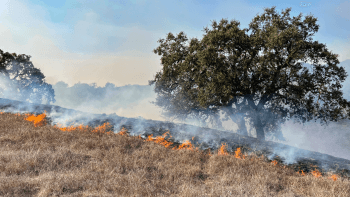
Wildfire safety came up as well. Sutherland described the Authority's conservation grazing program as a strong example of wildfire prevention. During the Sierra Fire in July 2026, land that had recently been grazed helped slow the fire down and kept it from burning with too much intensity. Looking forward, the Authority will use prescribed burns and continuous vegetation management as part of its wildfire resiliency strategy.

A family with two children riding bikes on the trail at Ulistac. Photo courtesy: L.Nguyen/Santa Clara Valley Open Space Authority
Farming as an Ally
One eye-opening moment for some came when Kaufman challenged the idea that farming and conservation don't mix. "They have to co-exist. A lot of people don't understand that there are ways for agriculture to be not just sustainable, but also beneficial for the environment, including for pollinators and wildlife.” Kaufman explained that there are many small farms in Santa Clara County practicing regenerative agriculture, such as applying compost to the soil to increase its carbon-sequestration potential or planting native hedgerows to benefit bees and other pollinators.

How to Get Involved
The panel closed with a simple message: Get outside, and stay involved. The Authority's preserves include accessible trails for wheelchairs, walkers, strollers and even toddlers just learning to walk. As Sutherland put it, early experiences in nature are what create the environmental leaders of tomorrow.
She also encouraged everyone to follow the Authority on social media and sign up for the agency's monthly newsletter.
The takeaway?
Protecting Santa Clara Valley's open spaces isn't a one-time win. It takes ongoing teamwork across public policy, farming and land stewardship partnerships, wildfire prevention and working with first response agencies, and raising the next generation to care.
As Sutherland and Kaufman made clear, this work is never really finished. It just keeps growing.
Related Posts