Your Top Nature Fears Debunked
Open space is for EVERYONE! Even if you're new to exploring nature or have some hesitations about venturing into the great outdoors, we're here to make you feel more comfortable and prepared in YOUR open spaces. Whether it's snakes, bugs, poison oak, ticks, getting lost, mountain lions, coyotes or something else that increases your heart rate and makes your hands sweaty—you're not alone! We asked our social media followers what their top nature fears were and the results are in...
1. Ticks
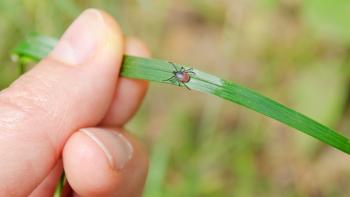
Coming in at the #1 spot are, perhaps with no surprise, ticks. These small external parasites are related to spiders and feed on the blood of mammals, reptiles and amphibians. Ticks live in tall grasses, where they hitch rides on passing animals, including humans. There are many illnesses that can be transmitted by tick bites, like Lyme disease. However, infected ticks must be attached for over 24 hours for the disease to transmit, so frequent tick checks are important.
The best way to avoid ticks:
- STAY ON MARKED TRAILS ONLY!
- Avoid tall grasses.
- Use insect repellent.
- Wear long sleeves, pants and tuck your pants into your socks.
- Always inspect your body after being in areas where ticks may live.
If bitten by a tick, use tweezers to grasp the tick as close to the skin as possible, at its head or mouth, and pull steadily and firmly upward, without twisting or jerking, until the tick lets go. If the tick’s mouthparts break off and remain in your skin, remove them with tweezers. Wash the bite area and your hands with soap and water or rubbing alcohol, then monitor the bite area for 30 days. Call your doctor if you develop a rash, flu-like symptoms, or other issues!
As much as they give us the ICK, ticks are still important members of the ecosystem. They serve as food for other animals and help to keep animal populations in check. Additionally, they serve as indicator species, as the population of ticks can help scientists understand how the ecosystem is doing in general.
2. Mountain lions
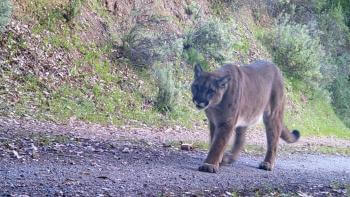
These big cats inhabit the open spaces of the Santa Clara Valley and are carnivorous — eating mostly deer, raccoons, rabbits, rodents and other small animals. They’re shy, elusive and prefer to avoid people. Most people will never encounter a mountain lion in the wild. While they can be active at any time of day or night, they are most active at dawn and dusk to hunt.
Safety tips:
- Stay on marked trails.
- Travel in groups and keep children close to you.
- Avoid hiking at night.
- Stay alert.
- Make slight, natural noise while you walk (use a hiking pole, emphasize your steps, rustle around in your backpack).
If you encounter a mountain lion, take these safety precautions:
- DO NOT RUN OR TURN YOUR BACK! Slowly back away and give it a chance to run away.
- Stand tall, make noise and try to look bigger by waving your arms in the air or throwing objects.
- Do not crouch or bend over: this can resemble a four-legged animal and trigger the mountain lion's instincts to attack.
- FIGHT BACK IF ATTACKED! Although attacks are rare, be ready to throw hands, water bottles, sticks, rocks or anything to show that mountain lion who’s boss.
Mountain lions may give you the creeps, but they’re valuable, beautiful predators that help keep prey populations under control, and we love them (from a distance of course)!
3. Poison oak

Pacific poison oak is a native shrub or vine that grows in forests, woodlands and grasslands. It is a resilient and pioneer species that helps stabilize soil in disturbed areas — paving the way for other plants to establish. Poison oak provides food for various wildlife, including birds that eat its berries and deer that eat its leaves. Insects and small mammals also rely on poison oak’s dense foliage for shelter.
You can spot poison oak by its beautiful glossy leaflets that grow in groups of three. The leaves are green through the summer but turn red come winter. Although poison oak loses its leaves in the fall, the bare stems still contain the oil (called “urushiol”) that causes allergic reactions.
What's the simplest way to avoid an unwelcome encounter with poison oak? Familiarize yourself with what it looks like in all seasons, and most importantly - STAY ON THE TRAIL!
If you come into contact with poison oak:
- Wipe exposed skin with rubbing alcohol within minutes of touching.
- Wash the area with soap and water as soon as possible.
- Avoid scratching to prevent infection and grab a cold compress.
- Wash your clothes/any items that have come in contact with the plant to avoid spreading.
Stay safe out there, hike responsibly and remember: LEAVES OF THREE, LET IT BE!
4. Snakes
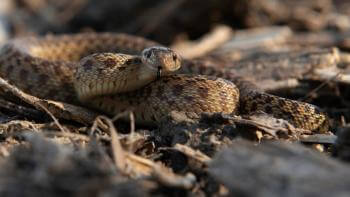
Snakes are vital to their ecosystems, helping control populations of rodents and insects and providing food for other animals on the food chain. Snakes are cold-blooded and rely on their external environment to regulate their body temperature. As it warms up in the spring and summer months, they emerge from underground to soak up the heat and breed soon after.
While these slithery noodles are serpent-ly a common fear, we can assure you that they’re NOT out to get you. In fact, most species are harmless. The Northern Pacific rattlesnake is the only venomous native snake species in the region, and they are typically accustomed to foot traffic, moving off the trail when they feel the vibrations of people walking towards them. They strike when they feel threatened, but don’t always use venom (known as a dry bite or warning bite).
DO’S:
- STAY ON TRAIL!
- Stay calm and give the snake space.
- If the snake crosses a designated trail, keep your distance and let it pass.
- Wear close-toed shoes and loose full-coverage clothing.
- Avoid stepping over rocks and logs and always look before sitting down.
DON’TS:
- Do not try to touch, handle, tease or provoke a snake: it may strike, as the snake may feel threatened.
- Never attempt to hurt or kill a snake. Whether you like them or not, you’re in their home!
- Do not rely on sound alone, as startled rattlesnakes may not rattle before striking defensively (and younger snakes don’t have fully formed rattles).
Snakes don’t want to interact with you any more than you want to interact with them. Let’s give them the respect and space they deserve! Learn more about Santa Clara Valley's snakes.
5. Tarantulas
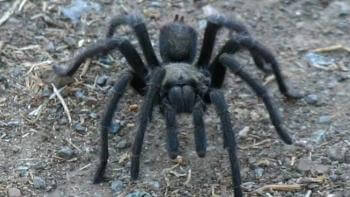
With their fuzzy bodies and hollow fangs, tarantulas aren’t as threatening as they may seem. In fact, these hairy arachnids are extremely beneficial to the ecosystem—controlling insect populations and improving soil health by digging and burrowing!
The best time to see tarantulas (or avoid them) is during the fall mating season that peaks in September! Males can be seen walking around searching for a partner around sunset and nighttime. Learn some hair-raising tarantula facts here.
So what do you do when you see a tarantula on trail?
- Give it space so it doesn’t feel threatened — tarantulas have barbed hairs they can release into the air and rub onto human skin that cause irritation.
- Keep your hands to yourself—don't touch or try to pick them up.
- Take photos (from a distance) and brag to your friends.
Tarantulas are friends, not foes! They only bite when they feel threatened. Tarantulas would rather run away from a predator than fight. If we respect them, they’ll respect us!
6. Coyotes
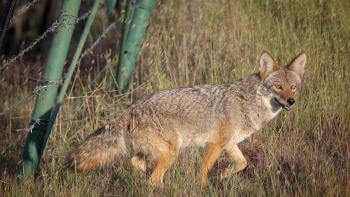
Are you unnerved by coyotes? You’re not AWOOO-ne!
Coyotes are a keystone species, meaning they have a significant impact on the ecosystem. They help keep prey populations in check which benefits agriculture and promotes species diversity. They also feast on animal carcasses, preventing the spread of disease and recycling nutrients back into the environment.
Although intimidating, coyotes are usually shy and prefer to avoid humans. And luckily, attacks on humans are rare. They can be seen at any time during the day or night, but are most active at dawn and dusk to hunt.
Safety tips:
- Stay on marked trails.
- Travel in groups.
- Avoid hiking at night.
- Stay alert and keep children close to you.
- Emphasize your steps while you walk to make your presence heard (but not too loud).
- Carry a whistle to blow in case of an emergency
If you encounter a coyote, take these safety precautions:
- DON’T RUN OR TURN YOUR BACK; slowly back away while making yourself seem large and loud.
- Never feed them. Associating humans with food can cause them to lose their fear and actually target people.
- FIGHT BACK IF ATTACKED! Although attacks are rare, be ready to throw anything to show that coyote you know HOWL to tussle.
Want to help track coyotes in your neighborhood? Check out University of California Cooperative Extension’s Coyote Cacher!
7. Getting lost
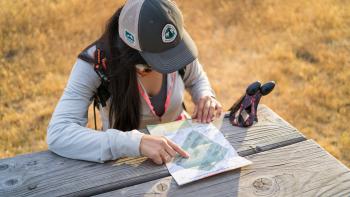
The thought of getting lost on the trail is a common worry, but it doesn’t have to stop you from exploring the great outdoors! With a little preparation, you can navigate each preserve with confidence.
The best way to avoid getting lost is to prepare before you go. You can access digital maps for Sierra Vista, Rancho Cañada del Oro, Coyote Valley and Máyyan 'Ooyákma – Coyote Ridge Open Space Preserves on our preserves page. Downloading them before your hike will keep you on track, even if you lose cell service!
If you try retracing your steps and still have no clue where you are, call 9-1-1 for help (especially if you are fatigued and/or dehydrated). We recommend having a fully charged phone before heading out on your adventures just in case! You should also always let someone know where you will be hiking and what time you plan to return, in case you lose cell service and can’t reach 9-1-1.
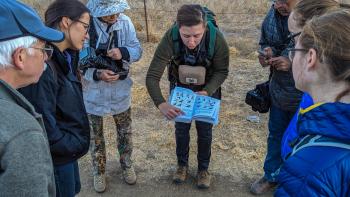
If you’re not ready to head out on your own, that’s okay too! We offer many FREE guided nature activities for people of all ages and abilities. It’s a great way to meet new people and explore with a knowledgeable guide. Visit our events page to view upcoming programs!
Everyone deserves to enjoy nature, and we encourage you to explore the beauty within your open space preserves. Enjoying open spaces means sharing a space with wildlife, so take precautions, hike responsibly and prepare before you head out to feel confident in your journey!
Related Posts