A Sneak Peek: Inside the Science & Stewardship Symposium
In January, scientists, Native tribes, policy makers and land managers gathered at the inaugural Science & Stewardship Symposium to share knowledge, forge new partnerships and build momentum towards solving conservation challenges. We’re pulling back the curtain on the Symposium, hosted by the Santa Cruz Mountains Stewardship Network, to reveal our top takeaways from this momentous day:
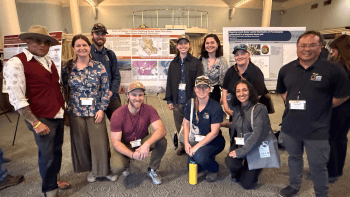
It Takes a Village
Symposium participants attended sessions that covered an array of conservation topics including rare and endangered species, watershed restoration, prescribed fire, forest management in a changing climate, ecosystem monitoring techniques and tools to create a healthy ecosystem. The diversity of topics mirrored the diversity of people in the room, including biologists, earth scientists, vegetation ecologists, foresters and Native tribes. Because every ecosystem is unique, so were their stories. Together, their diverse perspectives build strong and collaborative partnerships that are necessary to care for the land.
This event was a success because of the community of scientists and stewards that work so hard to keep this place beautiful, healthy and biodiverse. We are an ecosystem of practitioners and like any community, we are stronger together.
Giving Back to Nature
Don Hankins, a Professor of Geography and Planning at California State University, Chico who is of Miwok ancestry, shared the importance of using our senses, intuition and spirit to connect with and nourish the land. One of the ways Indigenous communities care for the land, he explained, is through cultural burning. This is the traditional practice of intentionally burning vegetation to support soil health, slow water and enhance biodiversity. While fire is often associated with destruction, cultural burns use low‑intensity, carefully guided fire to reduce the buildup of dry vegetation that can fuel severe wildfires, ultimately protecting both people and nature.
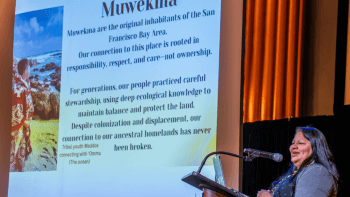
Bernadette Quiroz from the Muwekma Ohlone Tribe of the San Francisco Bay Area spoke about the importance of partnering with local Tribes to create meaningful opportunities for youth to connect with their Tribal heritage and care for the land. When Indigenous youth have hands-on nature experiences, they feel empowered to continue the cultural land stewardship practices of their ancestors and become the next conservation leaders. Discover how the Muwekma Ohlone Tribe collaborated with Stanford University to connect indigenous youth to their heritage.
Tailoring Technology to Conservation
Throughout the day, multiple speakers illustrated how they use technology to improve their conservation work. During the morning session, Nadia Hamey, a Consulting Forester at Hamey Woods, shared how technology has helped her team identify decay in redwood trees that were impacted by the 2020 CZU Lightning Complex Fire. Thanks to the data collected from their technical research, Nadia’s team created a field guide to help other foresters better identify the health status of redwood trees after a fire. By sharing their revelations with others, Hamey Woods is prioritizing partnership and collaboration for the good of nature and conservation.
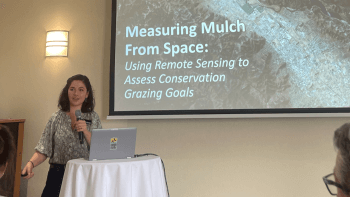
Anna McGarrigle, GIS Administrator at the Open Space Authority, gave a presentation about how she’s using mapping technology to analyze Santa Clara Valley’s grassland ecosystem and guide smarter care for the Authority’s managed lands. Each year, Anna uses satellite imagery to monitor the grassland levels across the landscape, a key indicator of how long cattle should graze without risking overgrazing. When cattle graze the grass to the right level, they reduce erosion of the land, improve conditions for native grass and plants and, ultimately, help us meet conservation grazing goals. See conservation grazing in action in this quick video.
Conservation grazing also has the potential to protect sensitive species, according to Stu Weiss, the Chief Scientist at Creekside Science. During the morning session, Stu shared that non-native grass continues to take over open space as the climate increasingly warms, depleting resources and pushing out native species. When conservation grazing is applied to a landscape, cattle help decrease the amount of invasive grass, providing more room for native grass species to flourish. As a result, grassland ecosystems see an increase in habitat for sensitive species like the Bay checkerspot butterfly. Learn how cattle play a role in the Open Space Authority’s conservation efforts.
Changing Our Conservation Strategies
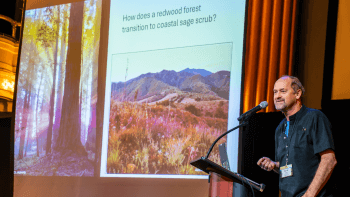
By definition, “conservation” typically refers to preservation and maintenance to prevent change. However, David Ackerly, a climate change biologist, challenged Symposium attendees to adjust, or add to, their traditional views of conservation. David argued that perhaps as conservationists, we should think about how to proactively adapt to the changing climate to safeguard regional biodiversity.
When climate changes, vegetation also changes, so it’s important to think about the types of plants that are favored in a warmer climate and how to mold our current environments to adapt to this new vegetation. As climate change continues to shape nature, we won’t be able to fully control what the natural landscape looks like, but we can use science to help us find a path forward that keeps natural spaces beautiful and supports native species.

Nature is Life-altering
Nature has a way of making us stop, think and admire the beauty that surrounds us. It gives us perspective and clarity, it reminds us of the bigger meaning of life and it shows us how to embrace simplicity.
Many Symposium speakers shared how nature has been a powerful force in shaping their lives. Some reflected on childhood experiences that set them on a path toward conservation careers fueled by passion and purpose. Others shared how nature is inspiring the revival of indigenous cultural practices and changing how the next generation is embracing ways in which to care for the land. No matter a person’s relationship to nature, one thing is clear: nature is a gift and an essential part of our lives that we will continue to care for.
Reflecting on the joy and passion that all attendees showcased at the Symposium, Aaron concluded, “It was so very rewarding to see a year’s work pay off with powerful stories and smiling faces striving to care for this one precious and wild landscape that we share.”
Congratulations to the Santa Cruz Mountains Stewardship Network for hosting this successful inaugural symposium! Learn more about the Science & Stewardship Symposium here.
Related Posts